For an ordinary patio container, start with a growing medium labeled for pots or containers rather than filling it with garden soil. A container must hold both moisture and air in a confined space, and soil that works well in a garden bed can settle into a dense mass inside a pot. The right choice is not necessarily the most expensive bag. It is the mix whose intended use matches your plant and the container you will maintain.
Read the bag for its purpose
Read the description on the bag as well as the large product name. Potting mix, seed starting medium, soil improver and raised bed soil serve different purposes, even when their packages look similar. In some regions the word compost describes a prepared potting medium; elsewhere it usually means decomposed organic material added to soil. Confirm the stated use instead of assuming that every bag called compost is suitable as a complete container filling.
Consider how quickly the plant should dry between waterings. A leafy vegetable in summer needs a different moisture pattern from a succulent in a cool room. Ingredients such as bark, coir and mineral particles affect structure, but a list of ingredients alone does not reveal the finished performance. Use a mix formulated for the plant group when it has distinct needs. Orchid bark, for example, is not interchangeable with a general fine textured potting medium.
Match moisture and air to the roots
Choose a pot with working drainage holes before opening the bag. A coarse layer at the bottom does not turn a sealed container into a draining one, and it reduces the space available for the root zone. Use a small piece of mesh only if needed to keep mix from escaping, ensuring that it cannot block water. Leave room below the rim for watering so the surface can be wetted without spilling mix over the edge.
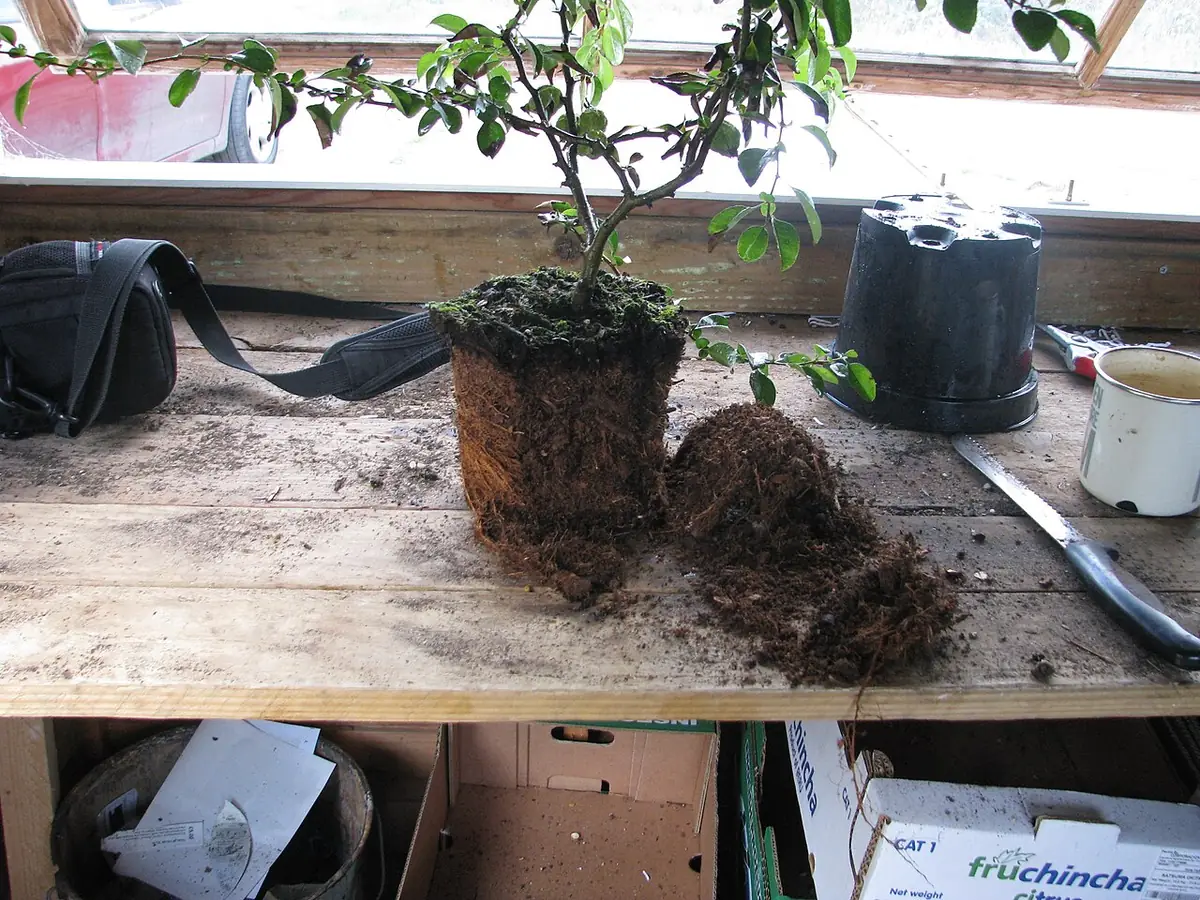
Moisten very dry mix before planting according to the product instructions. Break apart loose lumps and fill around the roots without forcing the medium into a hard block. The aim is contact with the root ball while retaining its structure. Water gently after planting and inspect for large gaps. If the original nursery root ball has a very different texture from the new medium, check both areas during the first few watering cycles.
Do not add fertilizer automatically. Some mixes include a starter charge or a controlled release product, while others provide little nutrition. Read the label for what is already included and when additional feeding may be appropriate. A dry plant should not be given a concentrated feed as a substitute for water. Similarly, a mix that remains wet for a long time needs an assessment of root space, drainage and exposure before more nutrients are added.
Check the planted pot
Watch how water enters the surface and exits the pot. Water rushing down a side gap can leave the center dry, whereas slow drainage and a persistently heavy pot can indicate a different problem. Repeat moisture checks in more than one position before deciding the mix is unsuitable. Pot size, plant size, wind and sunlight all influence the result. A very large container around a small plant can stay wet even when the medium itself is appropriate.
At the end of a growing cycle, assess the medium rather than automatically discarding it or reusing it unchanged. Material that has collapsed, developed a serious plant health problem or accumulated salts may need a different approach from a sound mix supporting an annual display. Store unused bags protected from contamination and excessive wetting. Keep notes on the product and plant response so the next purchase is based on observed performance in your own pots.