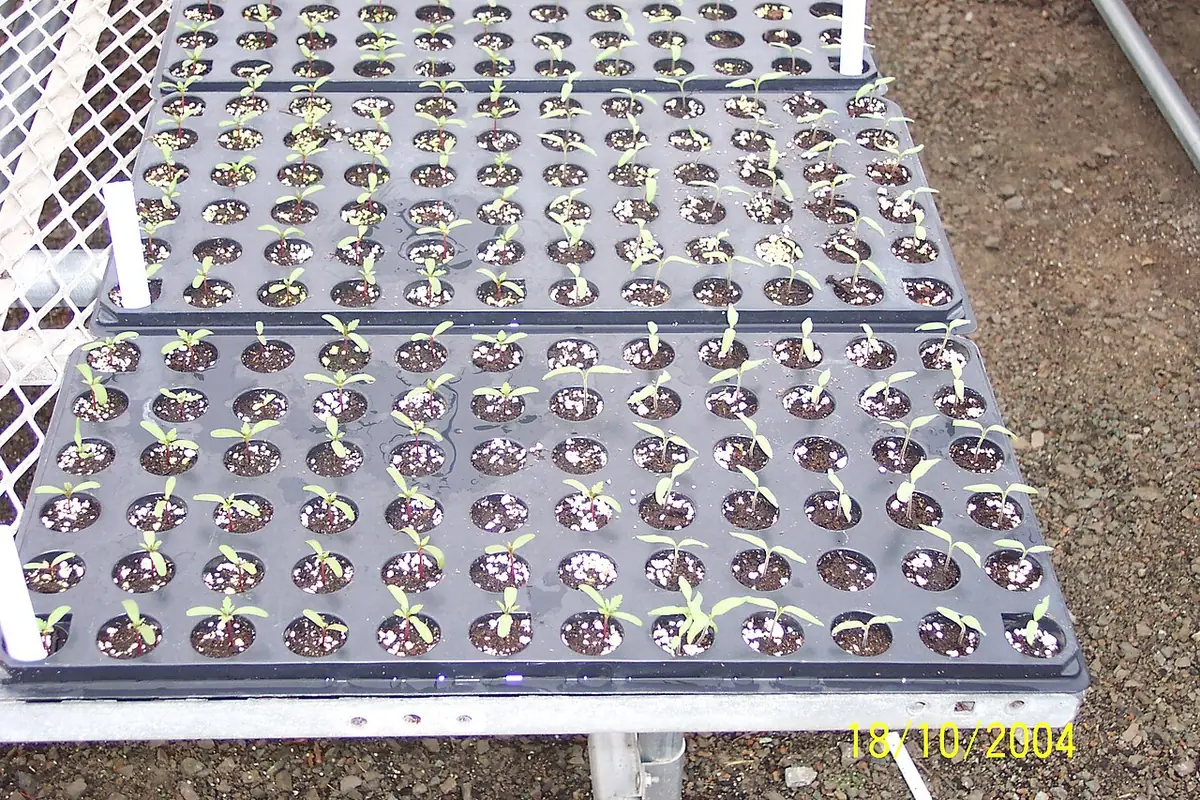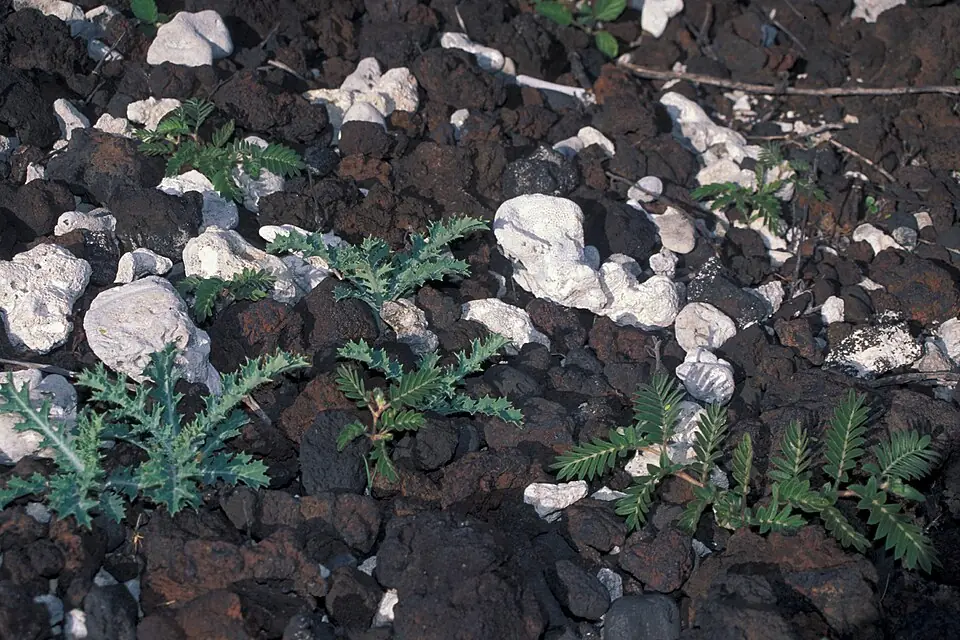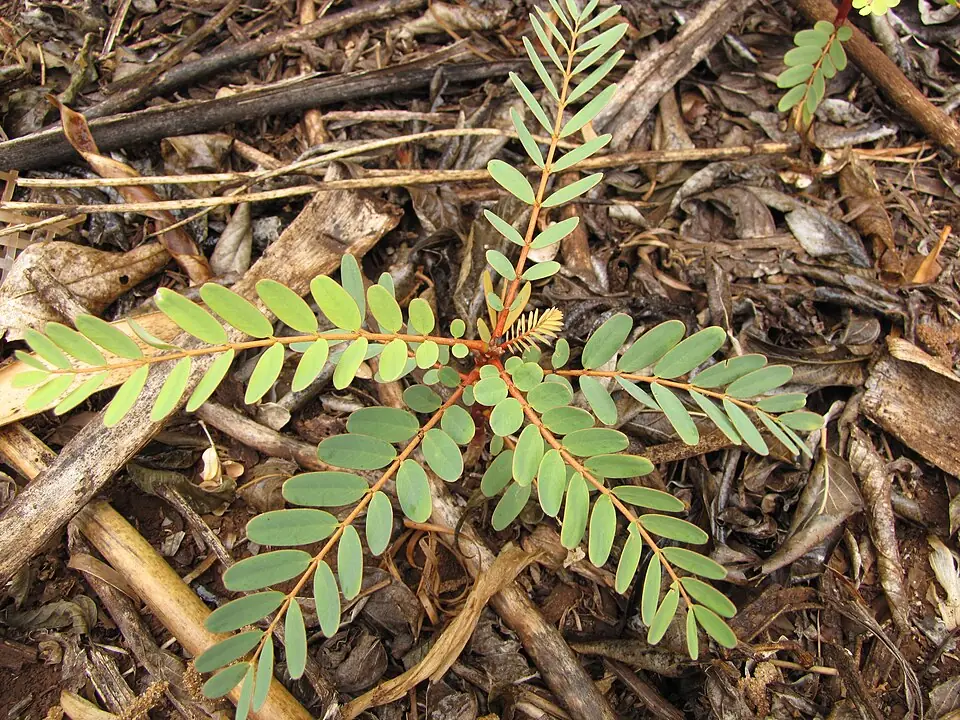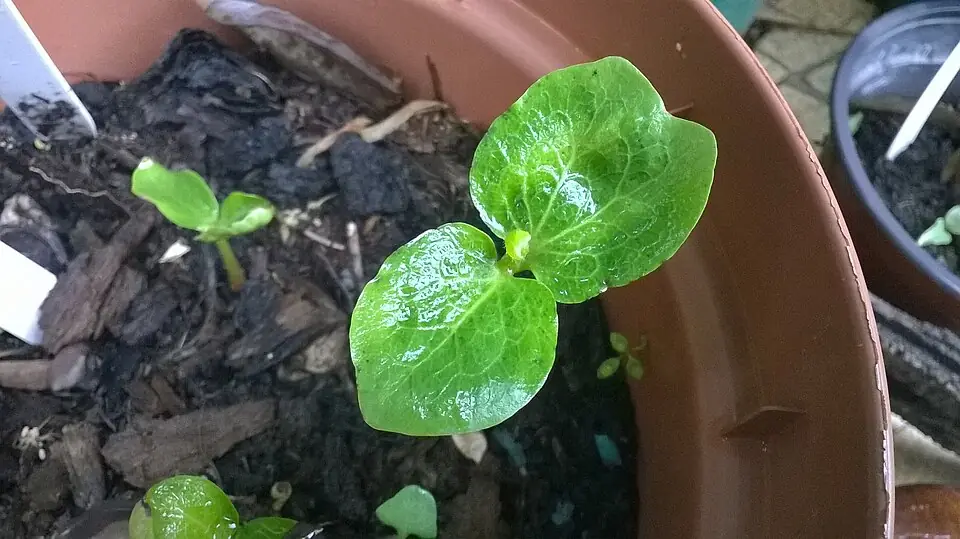
Leggy seedlings have unusually long, weak stems compared with their leaves and often lean toward a light source. The first response is to check the quality and duration of light, along with spacing and temperature. Adding fertilizer does not replace adequate light. Act while stems are still intact and new leaves are forming. A seedling that has already collapsed at a narrowed, damaged stem base may have a different problem and should not be treated as simple stretching.
Recognize stretching before collapse
Compare seedlings of the same species and age rather than expecting every crop to look equally compact. Some naturally emerge on longer stems, while others stay close to the medium. A persistent lean, wide gaps between leaves or a dense crowd of pale shoots provides more useful evidence than height alone. Note whether stretching began immediately after emergence or later, when neighboring leaves started shading one another in a crowded tray.
Look at the actual growing position. A room may seem bright while a windowsill supplies too little useful light during short cloudy days. Turning the tray changes the direction of leaning but does not create more light. If you use a grow light, follow the fixture guidance for distance, coverage and duration. Different lamps vary greatly, so a distance quoted for another model can result in weak illumination or excessive heat at leaf level.
Correct light and crowding
Provide a regular dark period rather than leaving an improvised lamp on continuously. Keep timers, connections and fixtures suitable for the location and protect electrical equipment from water. Check the outer cells as well as those directly below the lamp because coverage may be uneven. As seedlings grow, adjust the setup according to the equipment instructions and the response of the plants. Move trays only where doing so does not reduce light to another batch.
Thin crowded cells once the seedlings can be identified and handled appropriately. Keep the strongest suitable plant and snip unwanted seedlings at the surface if pulling would disturb its roots. More room allows leaves to receive light and reduces competition for water. A small number of sturdy seedlings is usually more useful than a full tray of tangled weak stems. Do not keep extra plants solely because removing a sprouted seed feels wasteful.
Review temperature after germination as well. Heat that helped seeds start may be unnecessary once shoots have emerged, depending on the crop. Warm conditions with inadequate light can encourage weak extension. Follow species specific guidance and avoid a sudden move into cold air as a correction. Maintain moisture suitable for seedlings without leaving the cells constantly saturated. Gentle room airflow can be helpful, but a strong fan should not bend stems or dry the tray unevenly.
Choose a realistic recovery path
Recovery depends on the crop and severity. Some young plants can be moved into suitable larger cells, but not every species should be buried deeply. Tomatoes tolerate deeper planting better than many other crops, so their method should not be applied universally. Handle leaves and root balls carefully rather than squeezing fragile stems. If several seedlings are extremely stretched or damaged, a new sowing under corrected conditions may be the more dependable use of the remaining season.
Mark one representative plant and compare new growth after the light and spacing changes. The existing long stem will not shorten, so look for sturdier subsequent growth rather than an immediate transformation. Keep affected trays separate from sound ones if collapse or spreading stem damage appears. Record the sowing setup and what changed. That information helps prevent the same stretching in the next batch and turns an unsuccessful tray into a useful improvement in the growing system.