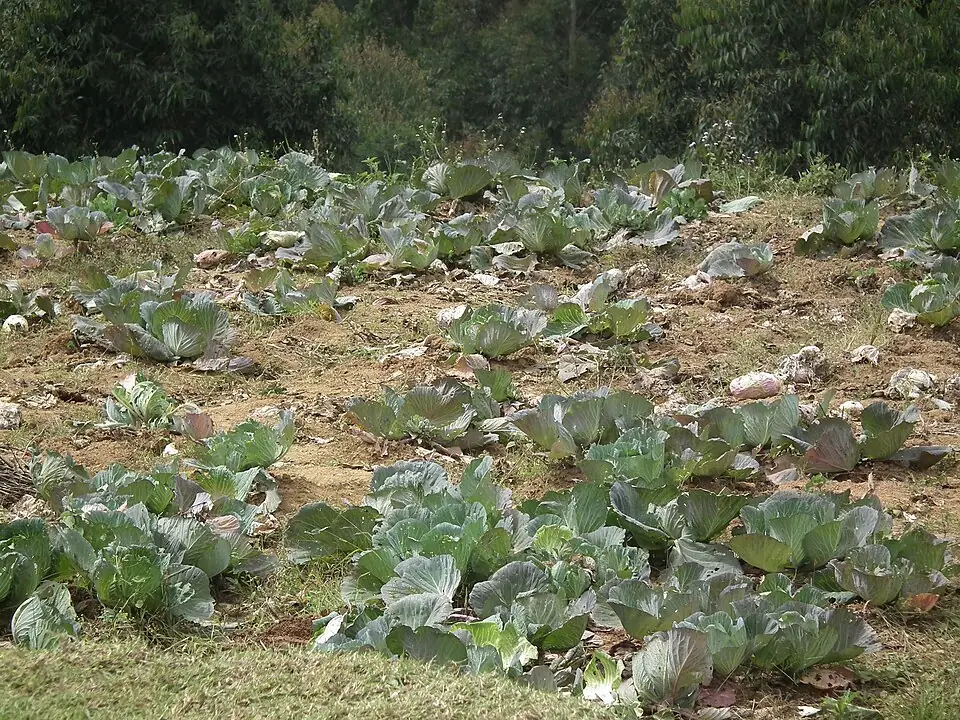
Cabbage varieties range from compact early heads to large mature storage types. Decide which scale suits the bed before spacing the transplants. A head that feels firm may already be useful even if a neighboring plant is still loose. Harvesting selectively reduces the chance that ready heads remain until weather fluctuations cause splitting, and it creates room to inspect the remaining plants more easily.
Prepare and establish the crop
For cabbage, prepare firm fertile soil enriched with mature compost. Work only when the ground is moist enough to crumble instead of sticking heavily to tools. Remove competing weeds before sowing or transplanting because pulling them out later can disturb the young crop. There is no benefit in making an unmeasured addition of every available amendment. Review what the bed has already received and use a soil test if nutrient or pH problems are suspected. A suitable starting structure is more useful than a very rich but poorly drained bed.
For cabbage establishment, set out hardened transplants with a strong compact root system. Use the variety instructions together with locally appropriate seasonal guidance. Conditions in the soil matter as well as the air temperature, so delay a planting if the rooting zone is unsuitable. Keep the seed packet or plant label until the crop is settled. It preserves information about growth habit and spacing that is difficult to reconstruct when several varieties are sharing a small garden.
Manage growth and moisture
As the cabbage plants begin growing, use the variety spacing because small and large headed types differ. Think about the mature crop and the space needed to reach it for inspection and harvest. A narrow accessible bed usually works better than packing every remaining gap. When thinning is needed, remove the surplus carefully while the plants are small. Keep routine walking on paths so the rooting area does not become compacted. Check the space again after the first strong flush of growth rather than assuming the original arrangement will remain adequate.
For cabbage moisture care, maintain even moisture while heads expand. Feel below the visible surface before deciding that the bed is dry. A dark wet crust can conceal a dry root ball, while a pale surface can cover soil that still contains adequate moisture. Apply water slowly enough to enter the intended rooting area. Stop if it runs into the path and check the cause. Adjust the next watering to rainfall plant size and soil texture instead of repeating the same amount automatically.
Watch the whole plant before making a correction. With cabbage, mature heads may split after a sudden increase in water. Compare affected plants with nearby examples receiving similar light and water. Notice whether the change appears on old leaves new growth or the entire plant. These details help separate a temporary environmental response from a persistent problem. A photograph and a note about recent weather are useful if you need identification from a local extension service or other reliable horticultural adviser.
Observe and harvest
For cabbage, the practical response is to harvest ready heads promptly instead of leaving the entire crop standing. Make the smallest justified change first and give the plant a suitable period to respond. Repeatedly changing watering feeding and location together makes the result difficult to interpret. Avoid removing healthy foliage simply to make the crop look tidier. Leaves support the plant, and unnecessary disturbance can slow recovery. If a plant is clearly failing, reassess the growing conditions before filling the same spot with another identical replacement.
At the cabbage harvest, cut when the head feels firm and reaches its expected size. Inspect the crop regularly once it approaches the expected stage because appearance can change quickly in suitable weather. Handle stems and roots gently and use clean tools when cutting is appropriate. Keep the working area clear of discarded damaged material so you can see new growth. This is a garden growing guide; prepare harvested produce according to reliable food safety guidance and never use material whose identity or suitability is uncertain.